

LEARN / LEARN SMARTER
Close the page. What stays with you?
Looking at a familiar explanation and reconstructing it without looking are different tasks. Retrieval practice asks you to bring previously learned information back to mind.
A review by Kathleen B. McDermott describes evidence that practising retrieval can support later remembering across a range of materials and learning settings. That does not make every quiz equally useful, or recall a complete measure of understanding.
A practical starting point
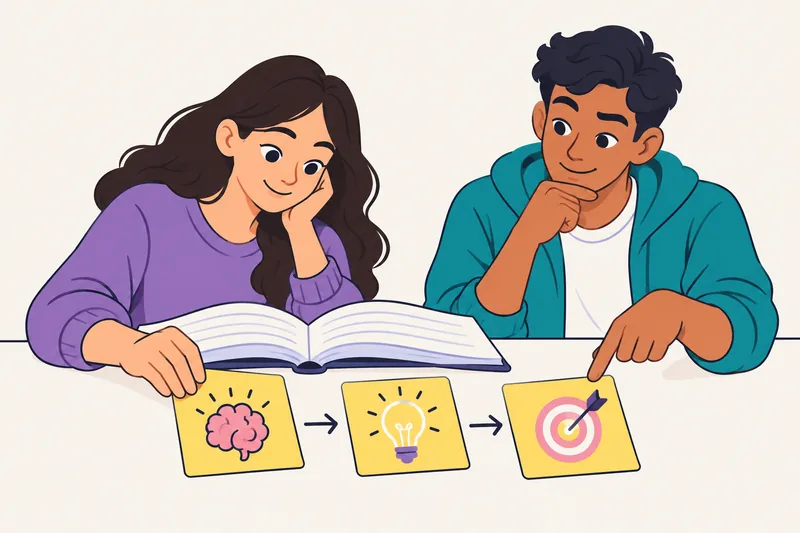
- Read a short explanation that you can broadly understand.
- Close it. Write the main idea and one example from memory.
- Compare with the source, correct errors and identify a gap.
- Return later and try again, with a suitable prompt if needed.
Try explaining how the example illustrates the idea. Remembering words and using a concept deserve separate checks.
Evidence: McDermott, K. B. (2021), Practicing Retrieval Facilitates Learning. The sequence above is TeachBox practical guidance, not a tested intervention.